
Fulbright Teachers for Global Classrooms Program
K–12 educators from elementary, middle, and high schools in the United States
Colombia, India, Morocco, Peru, Philippines, Romania, Taiwan, Uruguay
Approximately 12 months, including 2 to 3 weeks of travel abroad

The Fulbright Teachers for Global Classrooms Program is a yearlong professional learning opportunity and short-term exchange that equips elementary, middle, and high school educators from the United States with advanced pedagogical practices needed to strengthen classroom instruction and prepare U.S. students for success in a competitive global economy.
Program Description
Participants in the Fulbright Teachers for Global Classrooms Program will:
- Complete a rigorous, semester-long online course that equips educators with practical tools to integrate future-ready skills, emerging technologies, and student-centered instructional practices into their classrooms;
- Gather for an in-person professional development workshop in Washington, DC;
- Travel abroad for two to three weeks to observe instructional practices, exchange ideas with peers, showcase excellence in education, and deepen their understanding of other education systems;
- Complete an online credential in Super Intelligence (SI) that enables critical upskilling for K-12 educators in emerging technologies; and
- Create a global education guide that translates the tools, strategies, and instructional practices gained through the program into actionable classroom applications.
- Timeline & Activities
Timeline
Applications for the 2027-2028 program are expected to open in November 2026 and close in January 2027, with application decisions released in Summer 2027. Program activities will take place between September 2027 and August 2028.
Program Activities
Online Global Education Course (September - December)
This 10-week, graduate-level, online course equips educators with practical tools to integrate future-ready skills, emerging technologies, and student-centered instructional practices into their classrooms. The course is thoughtful, content-rich, and rigorous, with many opportunities for practical application and collaboration.
While the course is largely asynchronous, it is not self-paced. Participants should expect to spend up to 10 hours per week on readings, projects, and assignments, including real-time webinars and collaborative activities. Opportunities are available to receive Continuing Education Units and/or graduate credits for completion of the course.
Symposium in Washington, DC (February)
Participants will gather in Washington, DC, in February 2028 for an in-person professional learning workshop to connect with educators and administrators from across the United States, prepare for the International Field Experience, and learn strategies for leveraging the Fulbright Teachers for Global Classrooms experience for the benefit of their school communities. The Symposium typically requires participants to take one to two days of leave during the school week for travel to Washington, DC.
International Field Experience (Spring - Summer; dates vary)
The two- to three-week, cohort-based International Field Experience provides participants with the opportunity to experience another country’s history, education system, and culture. The programming opens with full-group training sessions, school visits, meetings with education leaders, and cultural excursions and workshops, followed by travel in smaller groups to other communities to observe classrooms, engage with local leaders, and exchange ideas and best practices with local educators who are familiar with the U.S. education system. The International Field Experience concludes with debriefing activities during which participants reconvene and reflect on their experiences in-country before returning to the United States.
Global Education Guide & Super Intelligence (SI) Educator Credential (ongoing; completed by August 2028)
Participants will complete an online credential that enables critical upskilling for K-12 educators in emerging technologies.
Throughout the program, each participant will create a digital resource that translates the tools, strategies, and practices gained through the program into actionable classroom applications for their own professional context.
Funding Provisions
Fulbright Teachers for Global Classrooms provides for flight and lodging costs associated with domestic and international program travel, host-country visa support where applicable, health coverage for accidents and sickness during international travel, and a stipend to offset other costs not directly covered by the program. The stipend is not intended to replace a participant's salary and will vary depending on the host country, duration of travel, and other factors.
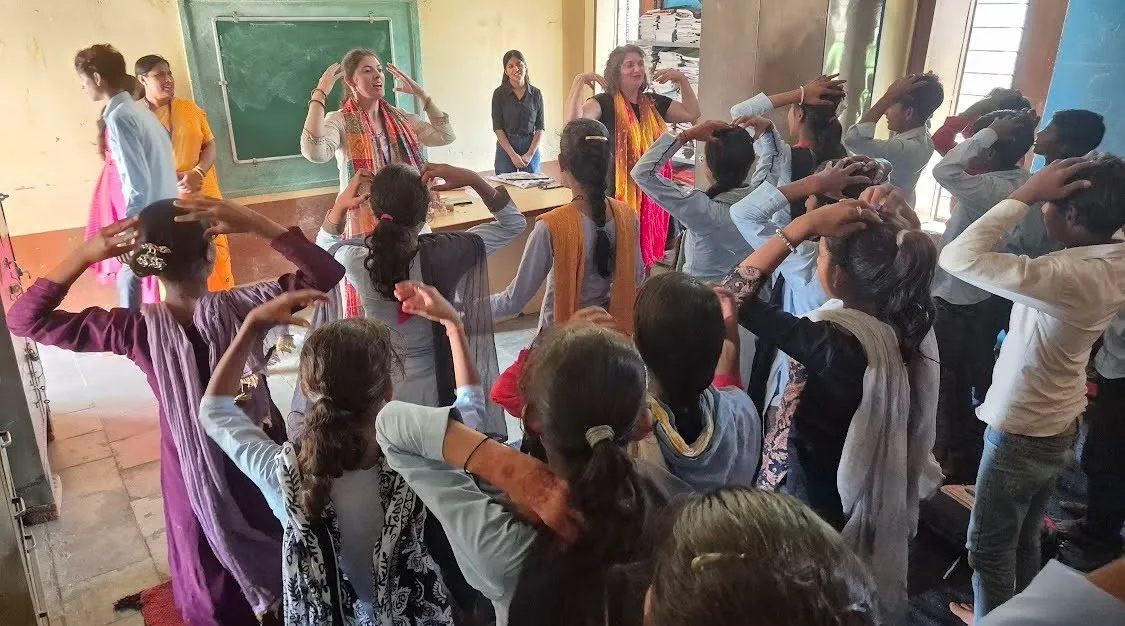
Fulbright Teachers engage students in India Fulbright Teachers at the front of a classroom in India- Eligibility
The Fulbright Teachers for Global Classrooms Program welcomes applicants from a wide range of disciplines, including but not limited to: Career & Technical Education, Earth & Physical Sciences, Elementary Education, English Language Arts, ESL/ESOL, Humanities, Library & Media, Special Education, STEM, and Visual & Performing Arts.
To be eligible for the Fulbright Teachers for Global Classrooms Program, the applicant must:
- be a U.S. citizen who resides in a U.S. state or territory, or who works on a campus operated by the Department of War Education Activity (DoWEA).
- hold at least a Bachelor’s degree.
- have at least three years of full-time instructional experience in a U.S. K-12 educational institution.
- be currently employed full-time in a U.S. K-12 school or district with a minimum of 50% of contracted hours in a student-facing role.
Applications are particularly encouraged from individuals who:
- have had at least five years of full-time K-12 teaching experience in a U.S. state or territory, or at a school associated with the Department of War Education Activity (DoWEA).
- demonstrate commitment to remaining in U.S. K-12 education following participation in the program.
- have served in the U.S. Armed Forces.
- do NOT hold a Ph.D. in international education or a closely related field.
- have NOT participated in another Fulbright Program and/or had recent significant professional experience abroad.
- Professional experience abroad includes teaching, research, and professional development. It does not include personal travel, undergraduate study abroad, leading student trips, religious or volunteer trips, service in the U.S. Armed Forces, or serving in the Peace Corps.
- While previous participation in a Fulbright Program is not a disqualifying factor, preference is given to applicants who have not previously benefited from such an opportunity.
Alumni of the Teachers for Global Classrooms Program are not eligible to apply.
- Application
Applications to Fulbright Teachers for Global Classrooms are submitted via IREX’s Online Application System. In addition to personal and professional information, the application requires a series of short essay responses.
Required Documentation
- Resume or CV
- Letter of recommendation from the applicant’s principal or other direct supervisor with leave-granting authority
- Letter of recommendation from a second recommender of the applicant’s choice
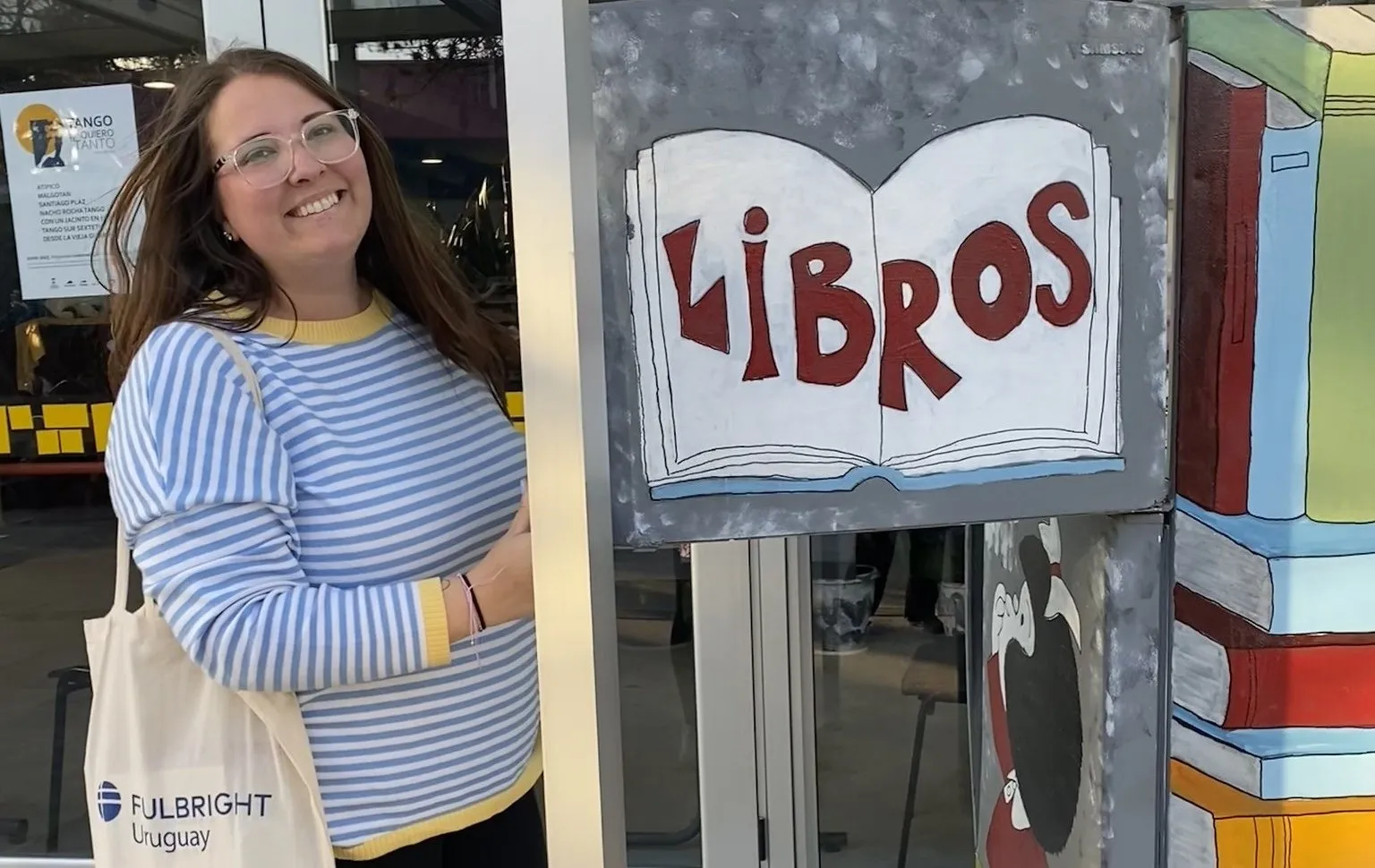
Fulbright Teacher visits schools in Uruguay Fulbright Teachers standing next to a sign that reads LIBROS- Selection Criteria
Fulbright Teachers for Global Classrooms Program participants are selected through an open, nationwide competition.
Following technical review to verify that applicants meet the minimum eligibility criteria, an independent committee of experts reviews each application and makes nomination recommendations based on the overall quality of the application, the applicant’s demonstrated qualifications, the potential benefit of the program for both the applicant and the applicant’s school, and the applicant’s history of and potential for educational leadership. Final nominations are determined by the Fulbright Foreign Scholarship Board.
Contact
Success Stories

Nikysha Gilliam
English Teacher, United States to Senegal
"I am more mindful of the cultures and the experiences that my students bring to class, and I really try to honor those."

Jodi Resch Brownell
Spanish Teacher, United States to France
“Building skills of intercultural competence, empathy, critical thinking, collaboration, language acquisition, and global citizenship will open more doors for student success and participation in the global market.”

Satoia Wright
Math Teacher, United States to Peru
"The Fulbright Teachers for Global Classrooms Program showed me that mathematic competencies are global competencies.”
